Tate Britain London Your Complete Visitor’s Guide to Exhibitions, Opening Times & More
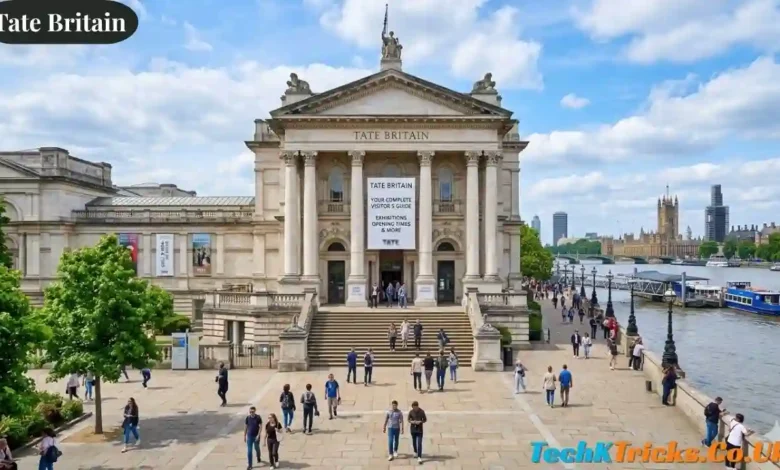
If there’s one place in London that truly captures the heart of British art, it’s Tate Britain. Whether someone is a seasoned art lover or simply curious about what makes British creativity so special, a trip to this iconic gallery on Millbank is well worth it. From sweeping historical masterpieces to bold contemporary works, Tate Britain London never fails to leave a lasting impression.
This guide covers everything a visitor needs to know — from Tate Britain exhibitions and opening times to tickets, the café, nearby restaurants, and the easiest ways to get there.
What Is Tate Britain?
Tate Britain is one of the most celebrated art galleries in the world and the proud home of the United Kingdom’s national collection of British art. Founded in 1897 by sugar merchant and philanthropist Sir Henry Tate, the gallery has grown into an institution that spans over 500 years of artistic history — from the Tudor period all the way through to the present day.
The Tate Britain London experience is a deeply rewarding one. The building itself is an architectural gem, featuring a classical portico, grand stone stairways, and bright gallery spaces flooded with natural light through high skylights. It sits on Millbank, on the north bank of the River Thames — a fittingly majestic location for such a distinguished collection.
Where Is Tate Britain?
For those wondering where is Tate Britain, the answer is straightforward: it sits at Millbank, London, SW1P 4RG, in the City of Westminster. The gallery overlooks the Thames and is within easy reach of central London landmarks.
For those asking where is the Tate Britain more specifically, it’s positioned between Pimlico and Vauxhall, close to the river — a location that makes it very easy to combine with other sightseeing in the area.
How to Get to Tate Britain
Knowing how to get to Tate Britain is simple, as the gallery is well connected by public transport.
Nearest Tube to Tate Britain
The Tate Britain nearest tube station is Pimlico on the Victoria Line, approximately 600 metres from the gallery entrance — roughly a 7–10 minute walk. Vauxhall station (also on the Victoria Line) is around 850 metres away and is a perfectly easy alternative.
For those travelling from further afield, Westminster station (Jubilee, District, and Circle Lines) is about 1,200 metres away. The nearest tube to Tate Britain is therefore Pimlico, making the Victoria Line the most convenient choice for most visitors.
By Bus, Bike & Boat
Several bus routes serve the Millbank area. Cycling is also a great option, with docking stations located nearby on Millbank Tower, Rampayne Street, and Vauxhall Bridge.
One of the most scenic ways to travel is via the Tate to Tate river bus (the RB2 service), which connects Tate Britain at Millbank Pier directly to Tate Modern at Bankside Pier. It runs every 30 minutes and is a brilliant way to visit both galleries in one day while enjoying views of the Thames.
Tate Britain Opening Times & Hours
Planning around Tate Britain opening times is easy, as the gallery keeps consistent hours throughout the week.
Tate Britain opening hours: Open daily, Monday to Sunday, from 10am to 6pm.
The Tate Britain hours remain the same across all seven days, which makes it convenient for weekend visitors and tourists alike. It’s always worth checking the official Tate website before visiting in case of special events or late-night openings.
One popular event to look out for is Late at Tate Britain — a monthly Friday evening programme with extended hours, half-price admission, a bar, and live music, designed to bring a younger and more social crowd to the gallery.
Is Tate Britain Free?
One of the most common questions people ask is: is Tate Britain free?
The good news is yes — general admission to Tate Britain is completely free. Visitors can walk in without booking and explore the permanent collection at their own pace, at no cost whatsoever.
That said, Tate Britain tickets are required for major temporary exhibitions. These ticketed shows are typically priced reasonably, and Tate members enjoy unlimited free entry to all exhibitions with no need to book in advance. For anyone who visits regularly, a Tate membership offers excellent value.
Tate Britain Exhibitions
Tate Britain exhibitions are one of the main draws for both first-time visitors and returning guests. The gallery offers a rich mix of permanent displays and high-profile temporary shows throughout the year.
Permanent Collection Highlights
The permanent collection is entirely free to explore and includes some of the most beloved works in British art history. Visitors can trace the story of British art from the Tudors to the Second World War, then continue through the defining movements of the 20th and 21st centuries. The gallery also holds the world’s largest free display of paintings by J. M. W. Turner — an unmissable experience for anyone with an appreciation of landscape art.
Temporary & Special Exhibitions
Temporary Tate Britain exhibitions rotate throughout the year and often feature major retrospectives of iconic British artists, thematic group shows, and new commissions. Recent and upcoming shows have highlighted the work of artists including James McNeill Whistler and Zineb Sedira, among others.
For anyone curious about Tate Britain what’s on during a specific period, the gallery’s official website keeps an up-to-date listings page. The Tate Britain whats on calendar is always active and varied, so there’s almost always something new to discover regardless of when a visit is planned.
Tate Britain What to See
With such a vast collection, knowing Tate Britain what to see first can feel a little overwhelming. Here are some highlights that shouldn’t be missed:
J. M. W. Turner Collection — The Clore Gallery, designed by architect James Stirling and opened in 1987, houses a remarkable body of Turner’s work. It’s the single largest display of his paintings anywhere in the world and a true highlight of any visit.
Pre-Raphaelite Masterpieces — Works by artists such as John Everett Millais, William Holman Hunt, and Dante Gabriel Rossetti offer some of the most vivid and emotionally charged paintings in the entire building.
Modern & Contemporary British Art — The gallery doesn’t stop at the 19th century. Visitors will find powerful works by Francis Bacon, Lucian Freud, David Hockney, Barbara Hepworth, and Bridget Riley, among many others.
The Turner Prize Exhibition — Held annually at Tate Britain, this prestigious award celebrates cutting-edge contemporary British art. Nominees are announced in May, their work goes on display in October, and the winner is announced in December. It tends to generate lively debate and plenty of media attention each year.
Art Now — A dedicated room showcasing the work of emerging artists throughout the year — a great way to discover the next generation of British talent.
What’s On at Tate Britain
When it comes to whats on at Tate Britain, the programme is consistently lively and engaging. Beyond the permanent collection and major exhibitions, the gallery regularly hosts talks, tours, workshops, family events, and performance-based programming.
Checking what’s on at Tate Britain before a visit is always a good idea, as exhibitions and events are added regularly. The gallery’s website makes it easy to filter by date, type of event, and audience — whether that’s families, adults, or schools.
What’s on at the Tate Britain page also highlights any special late-night events, free curator-led tours, and ticketed previews that might coincide with a visitor’s travel dates.
Tate Britain Café
After a few hours exploring the galleries, the Tate Britain café is a welcome stop. Located within the gallery building, the café serves a selection of light meals, sandwiches, cakes, and hot drinks — ideal for a mid-visit break.
The café is open during gallery hours and offers a relaxed environment where visitors can recharge before heading back to explore more of the collection. Its central location within the building makes it a natural gathering point for groups and families.
For members of the Tate, there is also a dedicated Friends Room, which provides a quieter, more private space to rest and socialise.
Restaurants Near Tate Britain
For those looking for something more substantial, there are several great options for restaurants near Tate Britain in the surrounding Millbank and Pimlico area.
The neighbourhood offers a range of dining experiences — from casual cafés and gastropubs to more refined sit-down restaurants. Pimlico Road and the streets around Victoria are particularly well-stocked with varied dining options across different price points. Given the gallery’s location near the Thames, riverside dining is also an option not far from the entrance.
It’s worth noting that the gallery’s own restaurant — which features a striking mural by Rex Whistler titled The Expedition in Pursuit of Rare Meats — has been closed in recent years following public discussion about the content of the artwork it contains.
Tate Britain Reviews: What Visitors Say
Tate Britain reviews from visitors are consistently warm and enthusiastic. Guests regularly highlight the quality and depth of the permanent collection, the welcoming atmosphere, and the fact that so much of it is completely free to enjoy.
Many reviewers note that the gallery never feels overwhelming or rushed — there’s a calm, contemplative quality to the experience that sets it apart from some of London’s busier attractions. The accessibility features, including quiet rooms, hearing loops, large print guides, and communication cards, also receive frequent praise from visitors with varying needs.
First-time visitors often comment that they wished they had allocated more time — there’s genuinely a lot to take in, especially across the permanent galleries and any running exhibitions.
Accessibility at Tate Britain
The gallery takes accessibility seriously. Ear defenders are available to borrow at the entrance, and a dedicated quiet room on the main floor is open for neurodiverse visitors, families, or anyone who needs a calm space away from the main galleries. Large print guides, coloured overlays, magnifiers, and communication cards are available throughout, and hearing loops are installed in key areas.
Staff are trained to assist, and BSL interpretation, captioning, and audio descriptions are offered where possible at special events and exhibitions.
Tate Britain vs. Tate Modern: What’s the Difference?
A common source of confusion for first-time visitors is the difference between the two major London Tate galleries.
Tate Britain focuses exclusively on British art, from 1500 to the present day. It’s the older of the two, with a collection rooted in history and national identity.
Tate Modern, located across the river in Bankside, focuses on international modern and contemporary art from 1900 onward. It occupies a converted power station and has a very different architectural feel.
Both galleries are free to enter and are connected by the Tate to Tate river bus, making it perfectly feasible to visit both in a single day.
Final Thoughts
Whether someone is visiting London for the first time or returning for another look at what the city has to offer culturally, Tate Britain deserves a place on the itinerary. With free admission to the permanent collection, world-class Tate Britain exhibitions, accessible Tate Britain opening hours, and a central location easily reached via the nearest tube to Tate Britain at Pimlico, there are very few barriers to experiencing one of the finest art galleries in Europe.
From Turner’s luminous seascapes to the provocations of the Turner Prize, from Pre-Raphaelite drama to cutting-edge contemporary commissions — Tate Britain London is, quite simply, unmissable.