Pulp O2 Review: A Detailed Look at Pulp’s London Comeback
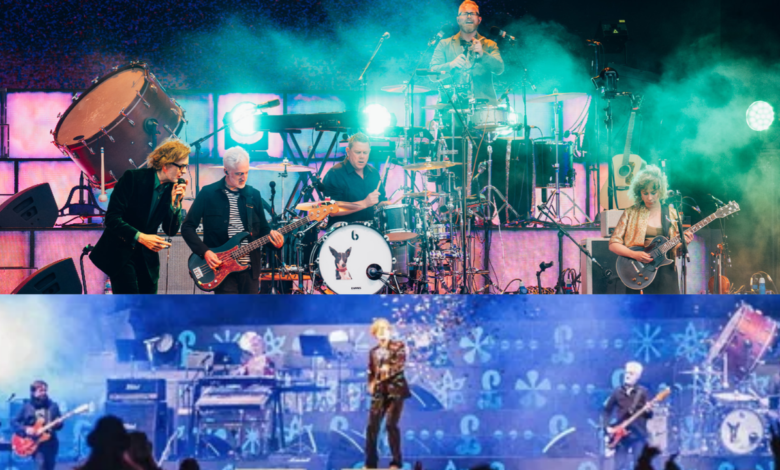
Pulp’s return to London’s O2 Arena has become one of the defining chapters of the band’s latest comeback. Fronted by the unmistakable Jarvis Cocker, the group brought together songs from its celebrated past with material from More, its first studio album in 24 years. The result was a concert built around nostalgia, theatrical presentation, humour and a surprisingly fresh sense of purpose.
The O2 shows took place in June 2025, and the performances later became central to the 2026 concert film Pulp: What Do You Do for an Encore? Reviews from major publications highlighted both the enormous audience response and the distinctive personality Cocker continues to bring to the stage.
Pulp O2 Review: The Return of an Unusual Britpop Band
Pulp have never fitted comfortably into the conventional rock-star template. While the 1990s Britpop era produced several huge guitar bands, Pulp developed a different identity through Jarvis Cocker’s observational lyrics, eccentric stage presence and songs about ordinary British life.
Their O2 return was particularly significant because it followed the release of More, their first new studio album in 24 years. The Independent reported that the album reached No. 1 in the UK around the time of the O2 shows, giving the reunion a contemporary reason to exist rather than making it simply a nostalgia tour.
That distinction matters. Pulp were not simply replaying Different Class from beginning to end. The concert gave newer songs space alongside the classics, showing that the band could connect its 1990s identity with a later stage of its career.
Jarvis Cocker Remains the Centre of Attention
The biggest strength of the O2 performance was undoubtedly Jarvis Cocker. His distinctive voice, body language and dry humour have always been fundamental to Pulp’s appeal, and the London show demonstrated that these characteristics remain central decades after the band’s commercial breakthrough.
The Independent described Cocker’s performance as energetic, noting his jumping, pointing and movement around the stage. The Standard, meanwhile, focused on his eccentric interaction with the audience, including his habit of carrying snacks and sharing them during the concert.
This is important because Cocker does not perform like a conventional arena frontman. Instead of relying entirely on spectacle, he creates a relationship with the audience through storytelling, gestures and humour.
That personality gives Pulp’s biggest songs a different atmosphere from a straightforward greatest-hits performance.
The Setlist Balanced New Songs and Classic Pulp
A major question surrounding the O2 concerts was whether the newer material could stand alongside songs that had become synonymous with Britpop.
The answer, based on contemporary reviews and later recordings, was that the newer songs fitted surprisingly naturally into the set. Songs such as “Spike Island,” “Slow Jam” and “Got to Have Love” were presented alongside established favourites including “Disco 2000,” “Common People,” “Babies,” “Something Changed,” “This Is Hardcore” and “Do You Remember the First Time?”
The structure allowed different generations of Pulp fans to experience the concert in different ways. Long-term followers could revisit familiar songs, while newer listeners had an opportunity to hear material that reflected the band’s later development.
The O2 set was also long enough to move beyond the most obvious hits. This helped create a broader picture of Pulp’s career rather than reducing the band to a handful of Britpop anthems.
O2 Arena Production Added a Theatrical Dimension
Pulp’s music has always contained a theatrical quality, and the O2 production expanded that idea to arena scale.
The Standard described a production featuring lasers, confetti, large screens, strings and inflatable visual elements. The Independent similarly highlighted the elaborate stage design, including changing visual environments that transformed the stage throughout the show.
The staging was particularly effective because it supported the eccentric character of Pulp rather than replacing it. The band did not suddenly become a conventional stadium-rock act.
Instead, the visual presentation reflected the surreal, funny and occasionally melancholic qualities that have always existed in Pulp’s work.
“Common People” and the Big Crowd Moments
Any Pulp O2 review has to discuss “Common People.” The song remains one of the band’s defining tracks and naturally became one of the biggest communal moments of the performance.
Alongside it, songs such as “Disco 2000,” “Babies” and “Sorted for E’s & Wizz” offered audiences an immediate connection to Pulp’s 1990s period. These songs have survived beyond the original Britpop moment because their themes and melodies remain recognisable to multiple generations.
At the same time, the concert did not depend entirely on nostalgia. The inclusion of More material helped establish that Pulp’s current identity was not simply a museum piece.
That balance was one of the most interesting aspects of the O2 shows.
What Worked Best About the Concert?
Several elements stood out from the published reviews.
Jarvis Cocker’s stage presence: His humour, movement and conversational approach remained a major attraction.
The combination of eras: Classic tracks were placed alongside songs from More, creating a career-spanning performance rather than a purely nostalgic set.
The production: Screens, lighting, strings and other theatrical elements gave the arena show a large-scale visual identity.
The audience connection: Songs such as “Common People” and “Disco 2000” provided the communal moments expected from a major Pulp concert.
The band’s continued relevance: The success of More demonstrated that Pulp’s comeback was connected to new music rather than only memories of the 1990s.
Are There Any Weaknesses in the Pulp O2 Experience?
The O2 Arena itself can be a mixed environment for an intimate band. The Guardian’s review of the later concert documentary specifically noted that some of the filmed O2 sequences could feel impersonal because of the size and nature of the venue.
This is a reasonable consideration for anyone assessing the concert experience. Pulp’s songs often work because of their observational intimacy. Hearing them in a huge arena can create extraordinary collective energy, but it can also reduce some of the closeness associated with smaller venues.
The scale of the production therefore has two sides: it makes the concert visually impressive, while the arena environment can sometimes distance the audience from the performers.
Pulp O2 Review: How the Concert Fits Into the Band’s Comeback
The O2 shows are particularly interesting when viewed as part of Pulp’s broader return.
The band had been away from recording new studio material for more than two decades before More. The new album and subsequent live performances therefore represented more than a reunion of former Britpop stars.
The 2026 documentary Pulp: What Do You Do for an Encore? reinforces this interpretation by combining footage from the O2 concerts with archival material and Jarvis Cocker’s narration. Reuters reported that the film explores the band’s history from Cocker’s teenage years through Pulp’s rise and eventual return.
The film’s release has also renewed attention around the O2 performances, allowing people who were not in London for the shows to experience parts of the concerts on screen.
Final Verdict on the Pulp O2 Review
The Pulp O2 shows represented a fascinating combination of past and present. The band’s most recognisable songs still delivered the expected crowd reaction, while More provided fresh material and demonstrated that Pulp’s creative story did not necessarily end with the Britpop era.
Jarvis Cocker remained the defining presence. His unusual humour, distinctive performance style and ability to communicate directly with an arena audience gave the concerts their personality. The elaborate production added spectacle, but the songs and Cocker’s character remained at the heart of the experience.
Reviews were broadly enthusiastic, although the enormous O2 environment could sometimes feel less intimate than Pulp’s music naturally suggests.
Ultimately, the significance of the O2 performances lies in what they represented: not simply a reunion with old hits, but a functioning Pulp capable of presenting new music alongside the songs that established its legacy.
With the 2026 concert film bringing those performances back into focus, the Pulp O2 review story has become part of a much larger account of one of Britain’s most distinctive alternative pop bands.
FAQs About Pulp O2 Review
When did Pulp perform at the O2 Arena?
Pulp played two London O2 Arena shows on June 13 and June 14, 2025.
What songs did Pulp play at the O2?
The set included songs such as “Spike Island,” “Grown Ups,” “Slow Jam,” “Disco 2000,” “This Is Hardcore,” “Something Changed,” “Babies,” “Common People” and “A Sunset,” alongside other tracks.
Was Pulp’s new album featured?
Yes. Songs from More, the band’s first studio album in 24 years, were incorporated into the O2 performances.
Who is Pulp’s lead singer?
Jarvis Cocker is Pulp’s frontman and lead vocalist.
Is there a film of Pulp’s O2 performance?
Yes. Pulp: What Do You Do for an Encore?, directed by Garth Jennings, combines footage from the 2025 O2 performances with archival material and Cocker’s narration.