Small All Wheel Drive SUVs: A Practical Guide to the Best Compact AWD Options
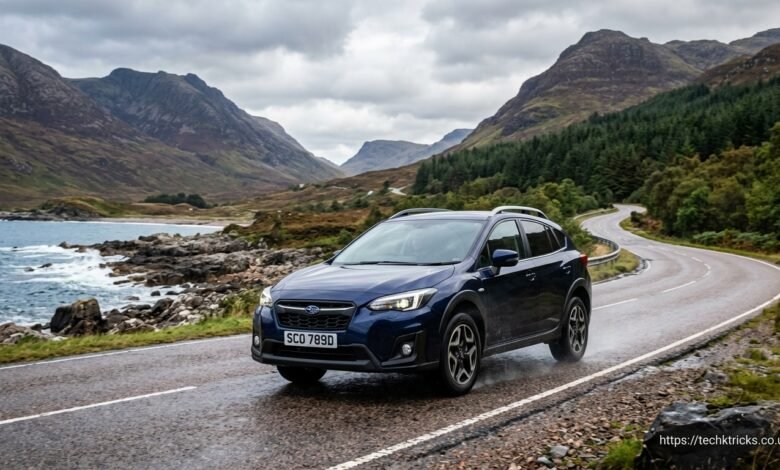
Small all wheel drive SUVs have become popular with drivers who want the higher seating position, cargo flexibility, and road confidence of an SUV without moving into a large vehicle. These compact crossovers are particularly useful for people who regularly deal with rain, snow, gravel roads, steep driveways, or changing road conditions. In 2026, the segment includes models such as the Subaru Crosstrek, Mazda CX-30, Toyota Corolla Cross, and Honda HR-V, giving buyers several different approaches to size, efficiency, comfort, and performance.
Unlike traditional four-wheel-drive trucks, modern AWD systems are designed primarily for everyday driving. They can automatically distribute engine torque between the front and rear wheels when additional traction is needed. This makes them useful for wet pavement and slippery surfaces while retaining the convenience of a compact crossover. However, AWD does not eliminate the importance of appropriate tires, sensible driving, and adequate ground clearance.
What Are Small All Wheel Drive SUVs?
Small all wheel drive SUVs are compact crossover vehicles equipped with a drivetrain that can send power to all four wheels. Most are built on car-based platforms rather than traditional truck frames, which helps provide a smoother ride, easier handling, and better efficiency for everyday driving.
The term “small SUV” covers a broad range of vehicles. Some are close to hatchbacks in size, while others provide enough passenger and cargo space for a small family. Models such as the Mazda CX-30 emphasize a refined interior and responsive handling, while the Subaru Crosstrek places greater emphasis on standard AWD, ground clearance, and rough-road capability.
Why Choose a Small AWD SUV?
One of the biggest advantages of an AWD SUV is improved traction. When roads become slippery, the system can help distribute power to wheels with better available grip. This can make starting from a wet intersection, climbing a snowy driveway, or traveling over loose surfaces easier.
Size is another major benefit. A small crossover generally takes less space in parking areas than a midsize SUV and can be easier to maneuver through crowded urban streets. At the same time, the elevated seating position and flexible rear cargo area provide more practicality than many traditional sedans.
Fuel economy can also be reasonable. For example, Car and Driver lists EPA combined estimates of 26–29 mpg for the 2026 Subaru Crosstrek, while the 2026 Toyota Corolla Cross is listed at 30–32 mpg depending on configuration.
Subaru Crosstrek
The Subaru Crosstrek is one of the most recognizable small AWD SUVs because all-wheel drive is standard across its lineup. That makes it different from many competitors that offer AWD only on selected trims. The 2026 model also provides substantial ground clearance, with Car and Driver listing up to 9.3 inches, helping it handle uneven roads and light off-road conditions.
The Crosstrek also provides a practical balance between city driving and outdoor use. Its relatively compact dimensions make it suitable for everyday commuting, while its suspension and AWD system give it additional versatility on dirt roads. The model can also be configured with a hybrid powertrain in some markets. AutoTrader Canada notes that the 2026 Crosstrek entered its third generation and added a gas-electric hybrid option for Canada.
Mazda CX-30
The Mazda CX-30 takes a different approach to the small SUV category. Instead of concentrating primarily on ruggedness, Mazda gives the CX-30 a strong emphasis on interior quality and driving response. Car and Driver currently lists the 2026 CX-30 with an EPA estimate of 27 mpg combined in one AWD configuration, while the available turbocharged engine provides considerably stronger performance.
For drivers who spend most of their time on paved roads, the CX-30 can be appealing because it feels closer to a sporty passenger vehicle than a traditional rugged SUV. AWD is available as part of the model’s configuration, and the vehicle remains relatively easy to maneuver in urban environments. Its trade-off is that cargo and rear-seat practicality are not its strongest characteristics compared with some more upright competitors.
Toyota Corolla Cross
The Toyota Corolla Cross combines the familiar Corolla name with a taller crossover body. It is available with AWD, while the hybrid version uses an all-wheel-drive system as part of its powertrain configuration in the U.S. market. Car and Driver reports EPA combined fuel-economy figures reaching 32 mpg for certain 2026 Corolla Cross configurations.
Its upright shape also gives it useful everyday practicality. Compared with the CX-30, the Corolla Cross provides a more conventional small-SUV layout, making it easier for buyers who prioritize passenger and cargo usability. The 2026 model also offers a hybrid option producing 196 horsepower according to a recent Autoblog comparison.
Honda HR-V
The Honda HR-V is another important choice among small SUVs. The 2026 U.S. model uses a naturally aspirated 2.0-liter four-cylinder engine producing 158 horsepower, paired with a continuously variable transmission. AWD is available rather than standard on every configuration.
The HR-V is designed around everyday usability rather than high-performance driving. Its relatively upright body helps provide a practical cabin, and its compact footprint makes it suitable for city use. Car and Driver lists the 2026 HR-V at 27–28 mpg combined depending on configuration.
Small AWD SUVs Compared
| Model | AWD Availability | Key Strength | Fuel Economy Focus |
|---|---|---|---|
| Subaru Crosstrek | Standard | Traction and ground clearance | Balanced |
| Mazda CX-30 | Available/standard by configuration | Driving experience and cabin quality | Moderate |
| Toyota Corolla Cross | Available; standard on hybrid AWD configuration | Practicality and efficiency | Strong |
| Honda HR-V | Available | Space and everyday usability | Moderate |
These models demonstrate why buyers should avoid choosing an SUV based on AWD alone. The drivetrain is only one part of the vehicle. Ground clearance, tire size, suspension design, engine performance, cargo capacity, fuel consumption, and safety technology can all influence whether a particular model fits a driver’s needs.
AWD Versus Four-Wheel Drive
AWD and four-wheel drive are often confused, but they are not identical systems. AWD is generally designed to operate automatically and continuously or on demand, depending on the vehicle. It is particularly suited to normal roads where traction can change quickly.
Traditional four-wheel-drive systems are more commonly associated with trucks and dedicated off-road vehicles. They may include selectable low-range gearing and hardware designed for demanding terrain. A small AWD crossover can handle snow, rain, gravel, and moderate trails, but it should not automatically be considered equivalent to a body-on-frame 4×4.
For most urban and suburban drivers, AWD is primarily a traction and confidence feature rather than an invitation to tackle extreme terrain.
What to Look for When Buying
When shopping for small all wheel drive SUVs, start by considering where the vehicle will actually be used. A driver living in an area with frequent snow may place more importance on AWD, ground clearance, winter tires, and safety systems. Someone living in a warm climate may care more about fuel economy, cabin comfort, and maintenance costs.
Cargo space is another important consideration. Two SUVs with similar exterior dimensions can have noticeably different interior layouts. If you regularly carry bicycles, luggage, groceries, pets, or outdoor equipment, check the cargo area in person rather than relying solely on published specifications.
Powertrain choices should also be considered. Some models prioritize naturally aspirated gasoline engines, while others offer hybrid systems or turbocharged engines. The Toyota Corolla Cross, for example, offers a hybrid configuration, while the Mazda CX-30 provides a turbocharged option for buyers seeking more performance.
Safety and Everyday Driving
Modern small SUVs typically include a range of driver-assistance technologies, although the exact features vary by trim. Subaru uses its EyeSight system, Toyota offers Toyota Safety Sense, Honda uses Honda Sensing, and Mazda uses its i-Activsense technologies. A recent comparison of these four vehicles highlights the different safety systems offered by each manufacturer.
It is important to distinguish between active safety technology and AWD. AWD can improve traction, but it does not shorten braking distances on every surface. Tires remain critical because acceleration, cornering, and braking ultimately depend on the contact between the tire and road.
Are Small AWD SUVs Good for Families?
For smaller families, these vehicles can provide a useful combination of passenger seating, cargo capacity, manageable dimensions, and reasonable running costs. Most models in this category seat five people, although rear-seat comfort can vary considerably.
Families should pay particular attention to child-seat compatibility, rear-seat legroom, cargo access, and the shape of the rear opening. A vehicle that looks spacious from the outside may not be as convenient once child seats, strollers, and luggage are added.
Final Thoughts
Small all wheel drive SUVs offer a practical middle ground between traditional cars and larger SUVs. They provide an elevated driving position, flexible cargo areas, and additional traction without requiring the size and fuel consumption of a large SUV. The 2026 market includes several distinct choices, from the standard-AWD Subaru Crosstrek to the efficiency-focused Toyota Corolla Cross, refined Mazda CX-30, and practical Honda HR-V.
The right choice ultimately depends on how the vehicle will be used. Drivers who frequently encounter rough roads may prioritize ground clearance and AWD capability, while commuters may put greater emphasis on fuel economy and comfort. By comparing drivetrain configuration, cargo space, safety technology, engine performance, fuel economy, and ownership costs, shoppers can narrow the small AWD SUV market to the vehicles that actually match their daily needs.