Olympic Medals: History, Types, Records, and Their Importance in Sports
What Are Olympic Medals?
Olympic medals are prestigious awards presented to athletes who achieve outstanding results at the Olympic Games. They represent sporting excellence, dedication, discipline, and years of hard work. Athletes from countries around the world compete in individual and team events, hoping to earn a place on the Olympic podium. Winning an Olympic medal is considered one of the greatest achievements in international sports.
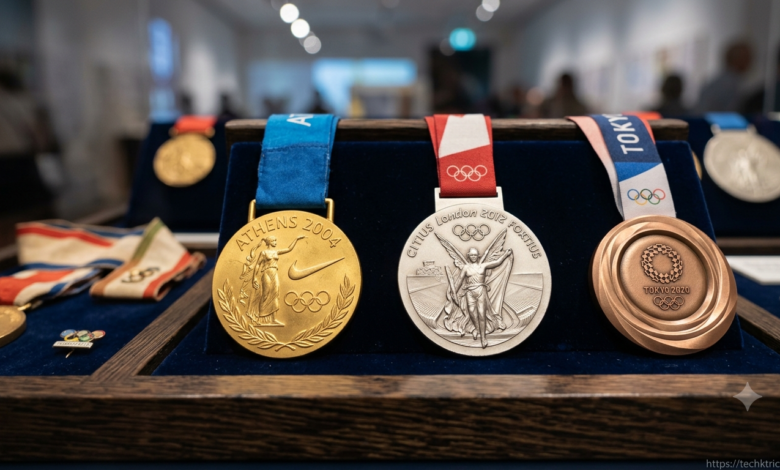
There are three main types of Olympic medals: gold, silver, and bronze. Gold medals are awarded to first-place finishers, silver medals to second-place finishers, and bronze medals to third-place finishers. These awards recognize exceptional performances across a wide range of sports, including athletics, swimming, gymnastics, wrestling, cycling, and winter sports. Although medals are physical objects, their significance extends far beyond their material value because they represent an athlete’s achievement on the world’s biggest sporting stage.
History of Olympic Medals
The tradition of Olympic awards has evolved considerably over time. The ancient Olympic Games in Greece used different forms of recognition, with winners traditionally receiving an olive wreath rather than the gold, silver, and bronze medals familiar today. The modern Olympic Games returned in Athens in 1896, establishing a new international sporting tradition.
At the 1896 Olympics, first-place athletes received silver medals, while runners-up received bronze medals. Gold medals were not awarded in the modern three-medal format until the 1904 Olympic Games in St. Louis, United States. Since then, the gold-silver-bronze system has become an internationally recognized symbol of sporting achievement. Olympic medals have also changed in appearance, size, materials, and design as host cities have introduced their own creative ideas.
Over the decades, medals have become more than simple awards. They often reflect the history, culture, architecture, and identity of the host city. The International Olympic Committee establishes requirements for Olympic medals, while the organizing committee develops the design for each edition of the Games.
Types of Olympic Medals
Olympic medals are divided into three categories, each representing a different finishing position in an event.
Gold medals: Gold medals are awarded to athletes or teams that finish first. They symbolize victory, excellence, and the successful completion of a demanding sporting challenge. Despite their name, modern Olympic gold medals are primarily made of silver and covered with gold rather than being entirely solid gold.
Silver medals: Silver medals go to athletes or teams that finish second. These awards recognize an outstanding performance and the ability to compete at an elite international level. A silver medal can represent an important milestone, particularly when an athlete reaches an Olympic final after years of preparation.
Bronze medals: Bronze medals are awarded to third-place finishers. They recognize athletes who secure a podium position against strong international competition. In certain tournament formats, including some combat sports, more than one bronze medal may be awarded when two semifinal losers are recognized.
All three medals carry significant prestige. Although gold receives the greatest public attention, silver and bronze medalists also demonstrate exceptional skill, determination, and commitment.
What Are Olympic Medals Made Of?
The materials used to produce Olympic medals depend on the medal category and the requirements established for the Games. Modern gold medals are not generally made entirely from gold. Under Olympic medal specifications, a gold medal must contain at least 92.5% silver and be plated with at least six grams of pure gold. Silver medals are made from silver meeting the required purity standards, while bronze medals use copper-based alloys.
The exact appearance and composition can vary between Olympic editions because each host city creates a distinctive medal design. Organizers may select particular finishes, textures, engravings, and other visual features to represent the location and its heritage. Sustainability has also influenced medal production, with some editions incorporating recycled materials or metals recovered from electronic waste.
The Paris 2024 Olympic medals featured a distinctive piece of iron from the Eiffel Tower, connecting the awards to one of France’s most recognizable landmarks. This design demonstrated how medals can combine sporting achievement with local history and cultural identity.
How Do Athletes Win Olympic Medals?
Winning an Olympic medal requires preparation, skill, consistency, and the ability to perform under pressure. Athletes generally spend years developing their physical abilities, improving technique, working with coaches, and competing in qualifying events before reaching the Olympics. Their preparation may include strength training, endurance exercises, tactical practice, nutrition planning, and mental conditioning.
The method used to determine medal winners depends on the sport. In track and field, athletes may compete in timed races, jumping events, or throwing competitions. Swimming medals are determined by race results, while gymnastics combines scores based on execution and difficulty. Team sports use tournament formats in which national teams progress through group stages, elimination rounds, and medal matches.
Olympic qualification does not guarantee a medal. Athletes must compete against the strongest qualified opponents from different countries, often under intense pressure and worldwide media attention. Injuries, equipment issues, weather conditions, and small differences in performance can influence results.
After an event concludes, officials verify the results before the medal ceremony. Athletes who earn medals typically stand on a podium while the appropriate national flags are raised and the winning country’s anthem is played.
Olympic Medal Counts and Records
Olympic medal tables help audiences compare the performances of participating nations. They usually list the number of gold, silver, and bronze medals earned by each country, together with the total number of medals. These tables are widely used by sports fans, journalists, researchers, and national sporting organizations.
The United States has historically been one of the most successful countries in Summer Olympic history, particularly in athletics, swimming, gymnastics, and other established Olympic sports. Other nations, including China, Great Britain, Russia or the former Soviet Union, Germany, Japan, and Australia, have also achieved significant results across different Olympic periods.
Individual athletes can build remarkable records by winning medals at multiple Olympic Games. Swimming and athletics, for example, offer several medal opportunities across different events. Team sports can also produce multiple medal-winning appearances throughout an athlete’s career.
However, medal records require careful interpretation. Summer and Winter Olympic totals should be distinguished when comparing national achievements. Historical changes in national boundaries, country names, and sporting participation can also affect comparisons. In addition, the country with the most total medals may differ from the country with the most gold medals, depending on the competition and ranking method.
Olympic Medals at the Paris 2024 Games
The Paris 2024 Summer Olympics took place from July 26 to August 11, 2024. The Games brought together athletes from around the world for competitions across 32 sports and 329 medal events. They also highlighted the relationship between sporting achievement and the host city’s cultural landmarks.
According to the official medal table, the United States finished first by total medals, earning 126 medals: 40 gold, 44 silver, and 42 bronze. China also won 40 gold medals but finished with 91 medals overall. Japan placed third with 45 medals, including 20 gold medals. Other successful countries included Australia, France, Great Britain, and the Netherlands.
The Paris 2024 medals attracted attention because each contained a piece of iron from the Eiffel Tower. This distinctive feature connected the awards directly to the host city and made them different from medals used at previous Games. The design reflected the idea that an Olympic medal can serve as both a sporting award and a lasting reminder of a particular place and moment in history.
The Paris Games also demonstrated that medal success can be measured in different ways. Gold-medal rankings emphasize first-place finishes, while total medal counts recognize a broader range of podium achievements.
Why Olympic Medals Matter
Olympic medals matter because they recognize exceptional achievement on a global stage. For athletes, winning a medal can represent years of sacrifice, training, and personal determination. It may also bring greater public recognition, sponsorship opportunities, and the chance to inspire future generations.
For countries, Olympic medals can become a source of national pride. Celebrations often take place when athletes return home, while their performances can encourage children and young people to participate in sports. Medal-winning achievements may also motivate governments and sporting organizations to invest in training facilities, coaching, and athlete development programs.
Nevertheless, medals are not the only measure of Olympic success. Athletes who achieve personal bests, overcome major obstacles, or represent their countries for the first time can make meaningful contributions even without reaching the podium. The Olympic movement also promotes values such as respect, friendship, fair play, and international cooperation.
Ultimately, an Olympic medal represents a remarkable sporting accomplishment, but the dedication required to reach the Games is itself worthy of recognition.
Frequently Asked Questions
What are the three types of Olympic medals?
The three types are gold, silver, and bronze. They are awarded to first-, second-, and third-place finishers, respectively, in Olympic events.
Are Olympic gold medals made of pure gold?
No. Modern Olympic gold medals are primarily silver with a gold coating. The medal specifications require at least six grams of pure gold in the plating.
When were gold, silver, and bronze medals first awarded together?
The modern three-medal format was introduced at the 1904 Summer Olympic Games in St. Louis, United States.
Which country won the most medals at Paris 2024?
The United States won the most medals overall at Paris 2024, with 126 medals. It earned 40 gold, 44 silver, and 42 bronze medals.
Do Olympic medals have the same design every time?
No. Each edition of the Olympics features a medal design developed by the host organizing committee, subject to Olympic requirements. Designs often reflect the host city’s culture and history.
Are Olympic medals valuable?
Yes. They can have material, historical, collectible, and personal value. However, their significance to athletes often far exceeds the market value of the metals used to make them.
Conclusion
Olympic medals are among the most recognizable symbols of excellence in international sports. Gold, silver, and bronze awards celebrate athletes who finish at the top of their events, while the stories behind those achievements demonstrate discipline, resilience, and determination. From the early modern Games in Athens in 1896 to Paris 2024, Olympic medals have evolved in their materials, designs, and cultural significance.
Understanding Olympic medals involves more than counting podium finishes. Their history explains how the modern Olympic tradition developed, their materials reveal changing production methods, and medal tables show how countries perform across different sports. Whether an athlete wins gold, silver, or bronze, earning an Olympic medal remains an extraordinary achievement that can inspire future generations and create lasting memories.