Pulp London O2 Arena Concert Review: A Spectacular Return to London
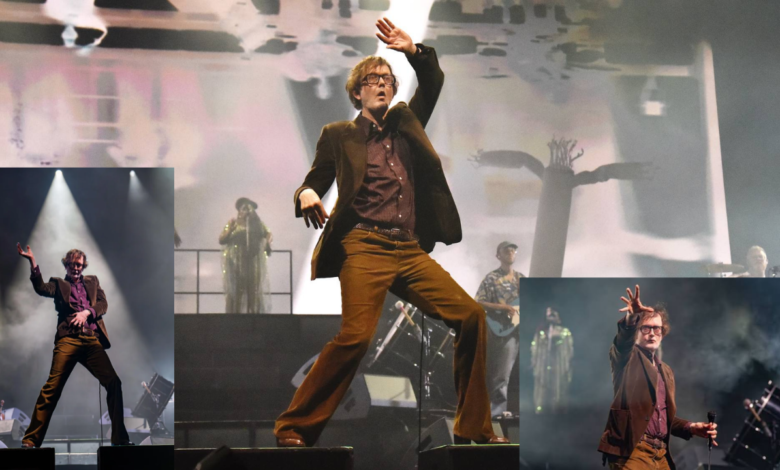
Pulp London O2 Arena concert review coverage captured one of the band’s most significant live moments since their return to the stage. On 13 and 14 June 2025, Pulp played two sold-out shows at London’s O2 Arena as part of the “You Deserve More” tour. The concerts arrived shortly after the release of More, the band’s first studio album in 24 years, making the shows more than a simple celebration of 1990s Britpop nostalgia. They became an opportunity for Jarvis Cocker, Candida Doyle, Nick Banks, Mark Webber and their expanded live ensemble to connect Pulp’s past with its present.
Pulp’s O2 Arena Return
The London concerts represented an important moment in Pulp’s comeback story. Although the band had already returned to live performance in 2023, the 2025 O2 shows arrived with new music to present alongside the songs that established Pulp as one of Britain’s most distinctive alternative acts.
The timing was particularly significant because More had reached No. 1 in the UK album chart around the same weekend. Reviews noted that the band did not simply rely on familiar material. Instead, the concerts gave substantial space to new songs while still delivering the major tracks that fans expected. This approach helped make the performances feel like a continuation of Pulp’s career rather than a recreation of their 1990s peak.
The Atmosphere Inside the O2
From the beginning, the atmosphere inside the arena was highly anticipatory. The O2 is capable of holding a very large audience, yet Pulp’s theatrical presentation helped create a sense of occasion rather than making the show feel like an ordinary arena date.
The production featured a large video screen, multi-level staging, dramatic lighting and additional musicians, including a string section. According to Louder, the stage was built around a four-tiered staircase and a huge screen, while several songs received distinctive visual treatments. This scale allowed Pulp’s theatrical personality to translate effectively to an arena environment.
Jarvis Cocker Remains the Centre of the Show
Any Pulp London O2 Arena concert review naturally has to focus on Jarvis Cocker. His stage presence remains one of the band’s defining characteristics. Rather than behaving like a conventional arena-rock frontman, Cocker combines awkward humour, theatrical movement, conversational interaction and carefully timed gestures.
During the show, he moved constantly around the stage and interacted with the audience in unexpected ways. Reviews mentioned his habit of carrying small treats, including fudge and grapes, which he tossed toward people near the front. These moments might sound insignificant, but they fit perfectly with the eccentric personality that has always separated Cocker from more conventional rock performers.
His presentation also brought humour to songs that deal with aging, relationships, memory and uncertainty. Before “Help the Aged,” for example, Cocker joked about getting the setlist mixed up, turning a potential mistake into another piece of audience interaction.
The Setlist Balanced New and Classic Pulp
One of the strongest features of the O2 concerts was the balance between More and Pulp’s established catalogue. The first set opened with “Spike Island,” a song from the new album, before moving through a mixture of recent material and classic tracks.
The set included “Grown Ups,” “Slow Jam,” “Sorted for E’s & Wizz,” “Disco 2000,” “F.E.E.L.I.N.G.C.A.L.L.E.D.L.O.V.E,” “Tina,” “Help the Aged,” “Farmers Market,” “This Is Hardcore” and “Sunrise.” The second set continued with “Something Changed,” “The Fear,” “O.U. (Gone, Gone),” “Party Hard,” “Acrylic Afternoons,” “Do You Remember the First Time?,” “Mis-Shapes,” “Got to Have Love,” “Babies” and “Common People.” The encore was “A Sunset.”
This structure gave longtime fans plenty of familiar material without treating the new album as an afterthought.
“Disco 2000” and “Common People” Become Major Highlights
Predictably, several of Pulp’s biggest 1990s songs produced some of the loudest reactions. “Disco 2000” generated a major singalong during the first set, while “Do You Remember the First Time?,” “Babies,” “Mis-Shapes” and “Common People” dominated the later stages of the concert.
The response to “Common People” was particularly powerful because of the song’s enduring cultural status. Decades after its original release, thousands of people in the O2 could still sing along to its lyrics. The Upcoming described the reaction to the classic as electric, while other reviews similarly highlighted the audience’s enthusiasm for the band’s best-known material.
However, the show was not constructed solely around these huge hits. Pulp also used quieter and more theatrical moments to vary the pace.
“Something Changed” Brings an Emotional Pause
One of the most effective transitions came at the beginning of the second set with an acoustic version of “Something Changed.” After the scale and spectacle of the first half, the stripped-back performance created a more intimate atmosphere.
This contrast demonstrated why Pulp’s catalogue works particularly well in a live setting. The band can move from large, energetic anthems to reflective material without losing the audience’s attention. The acoustic performance also allowed Cocker’s vocals and the song’s emotional qualities to take centre stage rather than relying on visual spectacle.
The Visual Production Added Another Layer
The O2 production was not simply a backdrop for the music. Visual elements were carefully integrated into individual songs. Louder reported that “This Is Hardcore” featured Cocker in a throne-like chair, while “Sunrise” was accompanied by a rising arrangement of illuminated bulbs.
The Independent also described the show as a highly theatrical production, with the large screen transforming the stage environment throughout the performance. This helped Pulp maintain the art-pop character that has always been part of their identity.
Rather than turning Pulp into a generic stadium act, the production emphasized the band’s eccentric visual language.
How Did the Band Sound?
The concert reviews were broadly positive about the band’s musical performance. The Upcoming specifically noted that Cocker’s voice remained capable of matching the pitch associated with the original recordings, despite many of those songs being more than three decades old.
The longtime members also remained central to the band’s sound. Candida Doyle’s keyboards, Nick Banks’ drumming and Mark Webber’s guitar work helped maintain the recognizable Pulp identity. The expanded live lineup and strings added additional depth to the arrangements.
The result was a performance that sounded connected to classic Pulp while allowing newer songs to sit naturally alongside older material.
Nostalgia Without Becoming a Pure Nostalgia Show
Perhaps the most interesting aspect of the Pulp London O2 Arena concert review is the question of nostalgia. Pulp could easily have built a tour around their biggest 1990s songs, but the 2025 shows took a different approach.
The release of More gave the band something contemporary to say. Reviews repeatedly observed that Pulp appeared interested in moving forward rather than simply repeating their past. Live4ever described the group as evolving with its history rather than becoming trapped by it.
That distinction matters. A reunion show can sometimes feel like an attempt to recreate a particular period. Pulp’s O2 concerts instead presented the older songs through the perspective of a band that had lived through several decades of change.
The Two-Set Format Worked Well
The decision to divide the performance into two sets gave the concert a theatrical structure. Rather than presenting a single uninterrupted run of songs, Pulp created a clear beginning, middle and second act.
The first set allowed the band to establish the atmosphere and introduce newer material, eventually building toward “This Is Hardcore” and “Sunrise.” After the interval, “Something Changed” provided a quieter opening before the performance gradually moved toward the major crowd-pleasers.
The final sequence of “Do You Remember the First Time?,” “Mis-Shapes,” “Got to Have Love,” “Babies” and “Common People” created a strong climax, followed by “A Sunset” from More.
Final Verdict on the Pulp London O2 Arena Concert
The Pulp London O2 Arena concert was significant because it demonstrated that the band’s appeal was not limited to memories of Britpop. The 2025 performances combined established favourites, new songs, theatrical staging and Jarvis Cocker’s unmistakable personality.
The O2 shows also arrived at a meaningful point in Pulp’s story. More represented the band’s first studio album in 24 years, and its No. 1 chart performance gave the concerts an additional sense of momentum.
For longtime listeners, songs such as “Disco 2000,” “Babies” and “Common People” delivered the expected communal moments. For newer listeners, the inclusion of More showed that Pulp’s story had not simply stopped in the 1990s.
Ultimately, the O2 concerts presented Pulp as a band capable of acknowledging its history while continuing to create new material. That combination of nostalgia, humour, theatricality and contemporary songwriting explains why the London shows attracted such strong responses from critics and audiences alike. The concert was not simply a look backward at Britpop; it was a live demonstration of how Pulp’s distinctive identity had survived, changed and remained relevant decades after the band’s original rise to fame.