Giant of Kandahar: The Story, Origins, and What the Evidence Shows
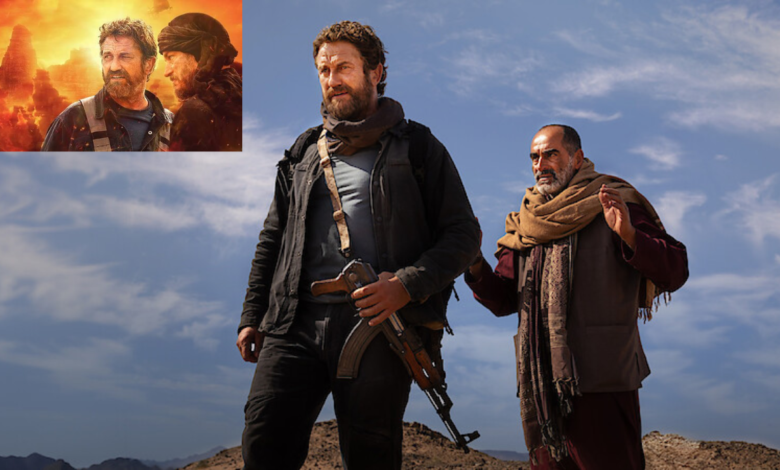
The Giant of Kandahar is one of the most unusual modern legends associated with the war in Afghanistan. The story describes an alleged encounter between U.S. military personnel and a gigantic humanoid creature in the mountains of Kandahar. According to different versions, the being was around 12 to 15 feet tall, had red hair, unusual numbers of fingers and toes, and carried a spear or pike. The soldiers supposedly killed it after a violent confrontation and transported its body away by helicopter.
Despite the dramatic details, the story has never been established as a documented military event. There are no publicly verified photographs, official reports, mission records, remains, or independently confirmed eyewitness accounts proving that such a giant existed. As a result, the Giant of Kandahar is generally treated as a modern legend or cryptid story rather than established history.
What Is the Giant of Kandahar?
The Giant of Kandahar is the name commonly given to a modern story about an alleged giant encountered by American forces in Afghanistan. Most popular versions place the incident around 2002, during the early period of the U.S.-led war in Afghanistan.
The narrative says that a military team was sent into a remote mountainous area after another group allegedly disappeared. When the soldiers reached a cave, they supposedly encountered an enormous red-haired humanoid. Some versions say the creature attacked them with a spear, killing or injuring a soldier before the team opened fire.
The alleged creature is usually described as being approximately 12 feet or taller, with six fingers and six toes. Some retellings add other extraordinary characteristics, including unusual teeth and immense physical strength. However, these details come from retellings of the legend rather than independently verified military documentation.
How the Story Became Popular
The origins of the modern story are more complicated than the popular internet version suggests. One early source associated with the legend is author Stephen Quayle, who discussed claims about giants in Afghanistan and the Middle East on paranormal radio programs during the 2000s.
Quayle’s 2008 book Longwalkers: The Return of the Nephilim also helped connect modern giant stories with the biblical concept of the Nephilim. The book itself was presented as fiction, although material surrounding Quayle’s work described alleged real-world inspiration for some of its ideas.
The story received another major boost in 2016, when filmmaker and author L.A. Marzulli published an interview with an anonymous person presented as a former military participant. The unidentified witness claimed that he had been involved in an encounter with the alleged giant.
Because the witness was anonymous and the interview did not provide independently verifiable documentation, the account remained controversial. Nevertheless, the video circulated widely online and became an important source for later versions of the Giant of Kandahar story.
What the Alleged Encounter Supposedly Involved
The most commonly repeated version begins with a missing military patrol. A Special Forces team is supposedly sent to investigate the disappearance in a mountainous region.
According to the anonymous account, the soldiers eventually encounter a giant near a cave. The creature is described as having red hair, extraordinary height, six fingers, and six toes. It allegedly carries a large weapon resembling a spear or pike.
The story claims that the creature attacks the soldiers and that one soldier is killed before the others shoot the giant. After the shooting, the soldiers supposedly recover the enormous body and transport it by helicopter. Some versions claim the body weighed approximately 1,500 pounds.
Another frequently repeated part of the legend is the alleged military cover-up. The story says that personnel were ordered not to discuss the incident and that confidentiality agreements were involved. However, there is no publicly verified evidence demonstrating that such an operation or cover-up occurred.
Is There Any Proof of the Giant?
This is the central question surrounding the Giant of Kandahar.
At present, there is no reliable public evidence confirming that the creature existed. Searches for supporting evidence have not produced authenticated photographs, biological remains, official military documents, or independently confirmed witnesses that establish the event as fact. Fact-checking and skeptical investigations have therefore treated the account as an unsupported modern legend.
This distinction is important because a story can contain detailed descriptions without being historically verified. Details such as a specific height, unusual fingers, a named soldier, a cave, a helicopter, or an alleged government cover-up can make a narrative sound realistic, but they do not independently establish that the event occurred.
The lack of physical evidence is particularly significant because the alleged creature would supposedly have been exceptionally large. A body of that size would potentially provide numerous forms of evidence, including photographs, medical or biological examination, transportation records, and other documentation.
The Nephilim Connection
One reason the Giant of Kandahar has attracted so much attention is its connection to the Nephilim, figures mentioned in the Hebrew Bible.
Some religious interpretations describe the Nephilim as giants or extraordinary beings. Modern paranormal writers have sometimes connected these ancient accounts with contemporary stories about unusually large humanoids.
The Giant of Kandahar narrative is frequently presented within this broader theory. In some versions, the creature is described directly as a Nephilim. However, there is no scientific or historical evidence demonstrating that the alleged Kandahar creature was connected to the biblical Nephilim.
The connection is therefore part of the interpretation surrounding the legend rather than an established fact.
Why the Story Continues to Spread Online
The Giant of Kandahar has many characteristics that make it particularly suitable for internet storytelling. It combines military secrecy, ancient mythology, Afghanistan, mysterious caves, enormous creatures, anonymous witnesses, and alleged government suppression.
These elements have appeared repeatedly in YouTube videos, podcasts, social-media posts, conspiracy discussions, and cryptid communities. A 2020 video by MrBallen helped expose the story to a much larger online audience, while other videos and articles continued to retell it in different forms.
Each retelling can also introduce new details. Some accounts describe the event as occurring in 2002, while others change the location, military unit, date, or circumstances. Such differences are important because they show that the story has evolved as it has moved between sources.
The Problem With Anonymous Testimony
Anonymous testimony can sometimes be useful in journalism, particularly when a person fears retaliation. However, extraordinary claims require additional evidence if they are going to be established as fact.
In the case of the Giant of Kandahar, the central eyewitness account is anonymous. The audience cannot independently confirm the person’s military identity from the publicly available material. There is also no publicly available physical evidence that can be examined independently.
That means the story ultimately depends heavily on testimony that cannot be independently verified. This does not prove that every person telling the story is deliberately lying, but it does mean the claim remains unverified.
Giant of Kandahar vs. Documented Afghan History
Afghanistan has a long history of military conflict, remote mountain communities, archaeological discoveries, folklore, and oral traditions. The rugged geography of the region can naturally contribute to stories about hidden places and unusual beings.
Historical Afghan and Central Asian traditions also contain stories about giants and supernatural creatures. However, ancient or regional giant folklore should not automatically be interpreted as evidence that a modern military encounter occurred.
The modern Giant of Kandahar story belongs to a different category: a contemporary legend associated with anonymous testimony and internet circulation. Some researchers have specifically noted that modern conspiracy versions can overshadow genuine local folklore and traditions about extraordinary beings.
What Happened to the Alleged Giant’s Body?
According to the popular story, the body was transported away by military helicopter after the encounter. Some versions claim it was taken to a secret location and that the military prevented witnesses from discussing it.
But there is no publicly authenticated chain of custody for such a body. No scientifically examined remains have been presented as belonging to the alleged creature.
This is one of the biggest unanswered problems with the story. If a humanoid creature more than 12 feet tall had actually been recovered by a modern military organization, its remains could potentially provide extraordinary scientific information. Without those remains or credible documentation, the claim cannot be independently confirmed.
Giant of Kandahar: Fact or Modern Legend?
The most accurate way to describe the Giant of Kandahar is as an unverified modern military legend.
There is a documented history of the story’s circulation through paranormal media, books, online videos, and anonymous testimony. The alleged encounter itself, however, has not been supported by publicly verifiable evidence.
That distinction matters. Saying that the story exists is different from saying that the giant existed. Researchers can document when and how a legend spread without confirming the supernatural or extraordinary event described by the legend.
Why the Giant of Kandahar Remains Fascinating
Even without physical evidence, the Giant of Kandahar remains popular because it sits at the intersection of several fascinating subjects. It involves military folklore, cryptozoology, ancient giant traditions, conspiracy theories, religious interpretations, and the way stories develop through modern media.
The internet has made it possible for a relatively obscure story to reach millions of people. Videos, podcasts, social-media posts, artwork, and articles can all introduce the narrative to new audiences.
For readers interested in mysteries, the story therefore remains intriguing—but its appeal should not be confused with proof.
Final Thoughts on the Giant of Kandahar
The Giant of Kandahar is a famous modern cryptid legend involving an alleged giant encountered by U.S. soldiers in Afghanistan. Popular accounts describe a red-haired humanoid measuring roughly 12 to 15 feet tall, possessing unusual digits and attacking soldiers near a cave.
However, no publicly verified evidence has established that this encounter actually happened. The story developed through paranormal and alternative-media sources, became especially prominent through an anonymous interview in 2016, and subsequently spread across YouTube, podcasts, social media, and cryptid communities.
The most responsible approach is therefore to separate the documented history of the legend from the unverified claims within the legend. Until authenticated physical evidence or reliable contemporary documentation emerges, the Giant of Kandahar remains a compelling piece of modern folklore rather than a confirmed historical event.