HRMS Singapore: Complete Guide to Human Resource Management Systems
What Is HRMS Singapore?
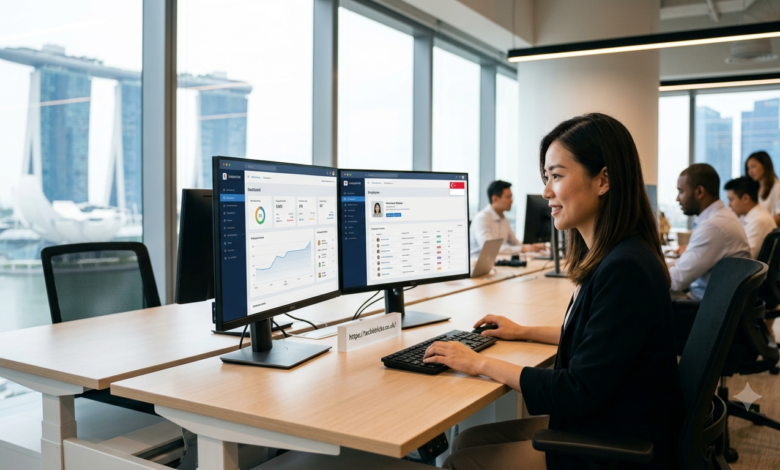
HRMS Singapore refers to Human Resource Management System software used by businesses in Singapore to manage employee information, payroll, attendance, leave, recruitment, and other human resources activities. Instead of handling every HR task manually through spreadsheets, paper documents, and separate applications, companies can use one integrated platform to organise their workforce.
A Human Resource Management System helps businesses reduce administrative work, improve data accuracy, and make HR processes more efficient. Singapore’s digital solutions directory, managed by the Infocomm Media Development Authority (IMDA), identifies employee records, payroll, leave management, claims, performance reviews, and training as important HRMS functions.
HRMS software can be particularly useful for small and medium-sized enterprises (SMEs), growing companies, and organisations with large workforces. The right system gives HR teams more time to focus on employee development, recruitment, workplace policies, and business growth instead of repetitive administrative tasks.
Why HRMS Software Is Important in Singapore
Singapore businesses need reliable processes for managing salaries, employee records, leave entitlements, and statutory reporting. When these responsibilities are handled manually, errors can occur because of outdated spreadsheets, inconsistent records, or missed deadlines.
An HRMS helps centralise essential information and automate routine activities. For example, when an employee submits a leave request, the system can route it to the appropriate manager for approval and update the employee’s leave balance. Depending on its configuration, the same information can also be used during payroll processing.
Singapore’s government has also promoted integrated payroll reporting through its One-Stop Payroll initiative, which aims to simplify submissions involving the Inland Revenue Authority of Singapore (IRAS), the Central Provident Fund Board (CPFB), and the Ministry of Manpower (MOM).

However, installing HRMS software does not automatically guarantee legal compliance. Employers must select a suitable system, configure it correctly, and keep their policies and employee information up to date.
Key Features of HRMS Singapore Software


12
1. Payroll Management
Payroll management is one of the most important features of HRMS software. It helps calculate employee salaries, overtime payments, approved deductions, and other compensation components using the information entered into the system.
Singapore-focused payroll software may support CPF contribution calculations, itemised payslips, and tax-related reporting. Some systems also support the preparation or submission of employment income information through the IRAS Auto-Inclusion Scheme (AIS), subject to the provider’s capabilities and current requirements.
Businesses should confirm that their chosen software supports the payroll rules applicable to their employees and provides updates when relevant regulations change.
2. Employee Records Management
An HRMS provides a central location for employee information, including job titles, employment dates, contact details, salary records, reporting relationships, and relevant employment documents.
Centralised records make it easier for authorised HR staff to retrieve information when needed. They can also reduce duplicate data entry and help companies maintain consistent employee files.
Because employee records contain personal information, businesses should establish access controls and retention policies to protect sensitive data.
3. Leave and Absence Management
Leave management tools allow employees to request annual leave, sick leave, and other applicable leave types through an online portal or mobile application.
Managers can review requests, check available balances, and approve or reject applications according to company policies. HR teams can also monitor absences and identify staffing gaps more easily.
A Singapore-ready HRMS should allow businesses to configure applicable statutory entitlements and company-specific benefits correctly. Employers should still verify eligibility rules under Singapore’s employment legislation.
4. Attendance and Timesheet Tracking
Attendance tracking helps businesses record working hours, late arrivals, absences, shift schedules, and overtime. Depending on the software, employees may clock in through mobile devices, web portals, biometric devices, or integrated timekeeping systems.
These records can support payroll calculations and workforce planning. They are especially useful for businesses with shift workers, retail employees, hospitality staff, or multiple work locations.
5. Employee Self-Service
Employee self-service allows staff to access selected HR information without contacting the HR department for every request. Employees may be able to download payslips, update personal details, submit claims, request leave, and review company policies.
This feature reduces routine enquiries and gives employees greater visibility into their own records. Access should be limited to information each employee is authorised to view.
6. Performance Management and Recruitment
More advanced HRMS platforms include recruitment, onboarding, performance reviews, training records, and employee development features.
Recruitment tools can help track applicants and interview stages, while onboarding workflows help new employees complete documents and required tasks. Performance management features allow managers to record objectives, feedback, and appraisal results in a structured format.
Not every HRMS includes all these capabilities, so businesses should compare the available modules before purchasing a subscription.
Benefits of Using HRMS Singapore
Implementing an HRMS can improve the way a business manages its employees and daily operations.
- Saves time: Automates repetitive tasks such as payroll preparation, leave calculations, and employee record updates.
- Reduces errors: Uses consistent employee data across connected HR functions, reducing manual data entry.
- Improves employee experience: Gives staff easier access to payslips, leave requests, and HR services.
- Supports compliance: Helps organise records and prepare payroll information required for relevant statutory processes.
- Improves decision-making: Reports can help managers understand attendance, staffing requirements, and workforce costs.
- Supports business growth: Standardised workflows make it easier to manage additional employees as the company expands.
IMDA highlights simplified payroll, centralised staff management, employee self-service, and scalable HR processes among the benefits of HRMS solutions for Singapore businesses.
The actual benefits depend on the quality of the software, the company’s existing processes, and how effectively employees use the system. Businesses should measure improvements in processing time, error rates, and administrative costs after implementation.
How to Choose the Best HRMS Singapore Solution
Selecting HRMS software requires more than comparing subscription prices. A suitable platform should match the company’s workforce requirements, operational processes, and compliance responsibilities.
Check Singapore Payroll Compatibility
First, confirm that the system supports relevant Singapore payroll requirements, including CPF contributions, itemised payslips, and applicable IRAS reporting. If the business needs to submit data through One-Stop Payroll, verify that the vendor supports the required functionality.
The official One-Stop Payroll vendor listing provides information about payroll software vendors supporting the initiative. The listing was updated on 14 September 2026.
One-Stop Payroll
Compare Features and Pricing
Create a list of essential features before requesting quotations. A small business might need employee records, payroll, leave management, and payslips, while a larger organisation may require advanced reporting, recruitment, shift scheduling, and integrations.
Ask vendors whether their pricing is based on employee headcount, modules, implementation fees, or additional services. Check whether training, technical support, data migration, and future upgrades are included.
Evaluate Security and Data Protection
An HRMS stores confidential information, so security should be a priority. Look for role-based permissions, secure authentication, appropriate encryption, audit logs, backup arrangements, and clear data-retention policies.
Businesses should also assess their obligations under Singapore’s Personal Data Protection Act (PDPA), including applicable requirements for the collection, use, disclosure, and protection of personal data.
Consider Integration and Usability
The platform should work with the company’s accounting software and other essential business tools. Integration can reduce duplicate entries and help payroll and financial records remain consistent.
Request a demonstration or trial before committing. A system that employees and managers find easy to use is more likely to deliver practical benefits.
Popular HRMS Software Options in Singapore
Several providers offer HRMS or payroll software for Singapore businesses. The following options are starting points for comparison, not a ranking of the best providers.

1. greytHR
Provides HR and payroll tools, employee lifecycle management, and Singapore-focused payroll capabilities. It may suit businesses seeking an integrated cloud-based platform.
Website: greytHR Singapore

2. PeopleCentral
Offers employee management, payroll, leave administration, attendance, and other HR functions designed for the Singapore market.
Website: PeopleCentral

3. Adaptive Pay
Provides an HR and payroll platform listed in Singapore’s official digital solutions directory. Businesses can assess its modules, integrations, and support options against their needs.
Website: Adaptive Pay

Offers HR management, payroll, leave, claims, attendance, and reporting capabilities, with deployment options that should be confirmed directly with the vendor.
Website: IQ Dynamics HRMS
These descriptions are based on publicly available provider information and the IMDA directory. Features, prices, eligibility, and integration capabilities may change, so verify current details directly with each provider.
HRMS Singapore Pricing and Government Support
The cost of HRMS software in Singapore varies according to the provider, number of employees, selected modules, implementation requirements, and level of support. Some providers charge monthly fees per employee, while others offer packages with separate setup or implementation charges.
Businesses should calculate the total cost of ownership rather than focusing only on the advertised subscription. For example, a low-cost platform may require additional payments for payroll integration, advanced reporting, or employee onboarding.
Singapore SMEs may also investigate the government’s digitalisation support programmes. IMDA’s SMEs Go Digital directory lists digital solutions and provides information about eligible support. However, grants are subject to the applicable programme conditions, approved solutions, and business eligibility. Companies should confirm current funding details through IMDA’s official website.
How to Implement an HRMS Successfully
A structured implementation process can help businesses avoid disruption and make the most of their investment.
- Identify business needs. Review current HR processes and identify problems with payroll, leave administration, attendance, and employee records.
- Select the right software. Compare vendors according to essential features, Singapore compliance support, security, pricing, and integrations.
- Prepare employee data. Clean existing records, remove duplicates, and check employee details before transferring them to the new system.
- Configure workflows. Set up payroll rules, leave policies, approval permissions, working schedules, and reporting requirements.
- Test the system. Run sample payroll calculations and verify leave balances, employee access, reports, and integrations before going live.
- Train employees and managers. Explain how to access payslips, submit requests, approve leave, and report technical problems.
- Monitor performance. Review errors, processing times, user feedback, and system security regularly after implementation.
A phased rollout can be helpful for companies with complex payroll arrangements or large workforces. It gives HR teams time to identify and resolve issues before the software becomes part of everyday operations.
Common Challenges When Using HRMS Software
Although HRMS software offers significant advantages, businesses may encounter challenges during adoption.
Data migration problems can occur when existing records are incomplete or inconsistent. Cleaning employee data before migration helps prevent inaccurate payroll calculations and missing information.
Employee resistance may arise when staff are unfamiliar with digital workflows. Clear communication, practical training, and accessible support can encourage adoption.
Integration difficulties may occur when HRMS software does not work smoothly with accounting or attendance systems. Businesses should verify integration requirements before signing a contract.
Compliance configuration errors can happen if statutory rules or internal policies are entered incorrectly. Companies should review system settings regularly and verify important calculations instead of assuming automation guarantees accuracy.
Security risks require ongoing attention. Employers should restrict access to authorised personnel, review permissions, and establish procedures for handling data breaches or unauthorised access.
Frequently Asked Questions About HRMS Singapore
1. What does HRMS stand for in Singapore?
HRMS stands for Human Resource Management System. It is software that helps businesses manage employee records, payroll, leave, attendance, claims, and other HR activities.
2. Which HRMS software is best for Singapore SMEs?
The best option depends on company size, budget, payroll complexity, and required features. Businesses can compare solutions listed in IMDA’s official digital solutions directory and verify their current capabilities before making a decision.
3. Does HRMS software handle CPF contributions?
Many Singapore-focused HRMS platforms support CPF calculations and payroll processing. Employers should confirm that the chosen system supports the applicable contribution rules and keeps relevant settings up to date.
4. Is HRMS software mandatory in Singapore?
There is no general requirement for every business to use a particular HRMS platform. However, employers must fulfil their applicable employment, payroll, recordkeeping, and statutory reporting obligations regardless of whether they use software or manual processes.
5. Can small businesses afford HRMS software?
Yes. Many providers offer solutions intended for smaller businesses. Costs vary, so SMEs should compare subscription fees, implementation expenses, available features, and potential eligibility for government digitalisation support.
6. Is cloud-based HRMS better than traditional software?
Cloud-based HRMS can offer remote access, automatic updates, and easier access across locations. Traditional or on-premises systems may provide different levels of infrastructure control. The right option depends on the company’s security policies, technical resources, and operational needs.
Conclusion
HRMS Singapore solutions help businesses simplify human resource management by bringing employee records, payroll, leave, attendance, and other administrative activities into a more organised system. The right software can reduce repetitive work, improve data consistency, and support better workforce planning.
Before choosing a platform, businesses should evaluate Singapore payroll compatibility, data protection, integration options, pricing, and customer support. They should also test the system carefully and verify important payroll and compliance settings.
Ultimately, a successful HRMS implementation is not just about purchasing software. It involves selecting the right tools, maintaining accurate employee information, training users, and reviewing processes regularly. With the right approach, businesses can build more efficient HR operations while supporting employees and long-term growth.