Roo Irvine Shop: A Complete Guide to Products, Shopping, and Online Style
The keyword Roo Irvine shop may refer to an online shopping destination, a retail business, or products associated with someone named Roo Irvine. When searching for a particular shop, customers generally want to know what it sells, how to browse its products, whether online ordering is available, and how to check prices, delivery options, and returns. Understanding these details can help shoppers make informed decisions and avoid unreliable websites.
Online shopping has become an important part of everyday life, allowing people to compare products, explore different styles, and purchase items without visiting a physical store. However, identifying the correct retailer is essential, especially when a search term does not clearly identify a business. This guide explains how to research Roo Irvine shop, what customers should look for when shopping online, and how to evaluate a retailer before making a purchase.
Who Is Roo Irvine?

Roo Irvine is a Scottish antiques expert and television presenter known for her appearances on antique-related television programmes, including Antiques Road Trip. Her professional interests include antique collecting, decorative objects, and the stories behind historic items.
According to an interview published by Antique Collecting in 2017, Irvine entered the antiques business after working in marketing. A change in her personal circumstances encouraged her to pursue a career that reflected her longstanding interest in antiques. The interview also described her expertise in Georgian glass and her ownership of an antiques shop in Kilcreggan, Scotland.
Her television work has helped introduce antiques to a wider audience. Rather than treating old objects simply as decorations, she encourages interest in their history, craftsmanship, and cultural significance. This approach makes her name relevant to people researching antique shops, vintage collectibles, and traditional decorative pieces.
It is important, however, to distinguish Roo Irvine’s professional background from the current status of any particular retail business. Historical reporting establishes a connection between Irvine and an antiques shop in Kilcreggan, but it does not independently confirm the shop’s current opening hours, address, inventory, or availability for online purchases.
What Is Roo Irvine Shop Known For?
The search term Roo Irvine shop is associated with interest in Roo Irvine’s antiques background and retail activities. Historically, the shop connected with her was described as an antiques business in Kilcreggan, a village in Scotland.
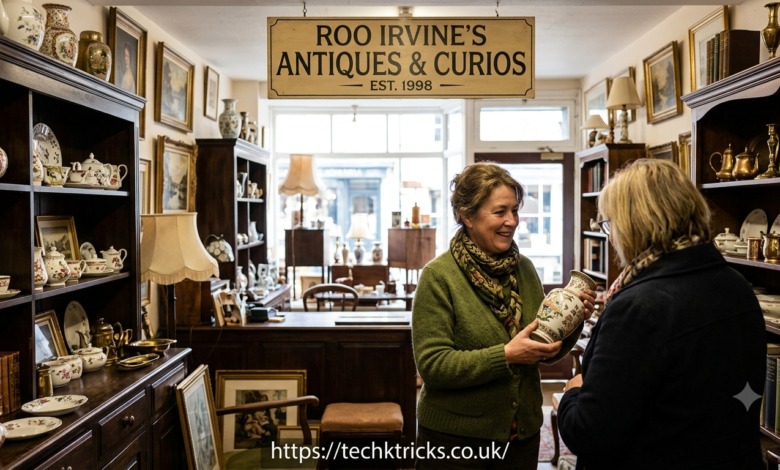
Antique shops generally offer objects that have survived from earlier periods, including decorative glassware, ceramics, furniture, silverware, ornaments, and collectibles. The exact selection varies according to the shop’s specialisation, stock, and purchasing activity. These categories should not be treated as a confirmed inventory of Roo Irvine’s shop.
For collectors, the attraction of an antiques shop often lies in the individuality of its objects. Unlike mass-produced goods, many antiques have distinctive marks, construction methods, materials, and signs of previous ownership. A piece might appeal because of its appearance, its historical background, or its potential place in a collection.
People searching for Roo Irvine shop should therefore identify the specific business before assuming that a website or social media account using a similar name is official. Confirming the retailer’s identity is especially important when buying valuable or unusual objects.
The Appeal of Antique Shopping

Antique shopping combines the experience of browsing with the process of historical discovery. Each object can offer clues about the period in which it was produced, the materials available at the time, and the tastes of the people who originally owned it.
One of the main attractions is individuality. An antique glass vase, an old silver serving piece, or a traditional wooden cabinet can provide a character that may be difficult to reproduce in contemporary mass-market products. Collectors often appreciate the craftsmanship and imperfections that distinguish older objects from newer reproductions.
Antiques can also complement modern interiors. A single vintage mirror, for example, may become a focal point in a contemporary living room. Similarly, historic ceramics and glassware can add visual interest to shelves, display cabinets, and dining spaces.
However, an object’s age alone does not determine its financial value. Condition, rarity, maker, demand, authenticity, and documented history can all influence its market price. Buyers should consider these factors rather than assuming that every old object is rare or valuable.
What Can You Look for in an Antique Shop?
When visiting an antiques retailer, it helps to approach the collection with a clear idea of what you want. Some buyers concentrate on a particular period or material, while others search for decorative objects that suit their homes.
Glassware and decorative pieces can interest collectors because of their shapes, colours, patterns, and manufacturing techniques. If a piece is described as Georgian or from another historical period, ask what evidence supports that attribution.
Ceramics and porcelain are another popular category. Makers’ marks, painted designs, glaze quality, and manufacturing characteristics may help establish an object’s origin. Nevertheless, marks can be copied, and expert assessment may be necessary for expensive purchases.
Furniture and household objects can combine practical use with historical interest. Before buying furniture, inspect its stability, joints, surface condition, and evidence of restoration. Transportation costs can also affect the overall price.
Small collectibles may include ornaments, old household accessories, silver items, and decorative curiosities. Smaller objects are often easier to transport, although their value still depends on authenticity, condition, and demand.
These are general examples of items commonly found in antiques businesses, not a verified list of products currently sold by Roo Irvine shop.
How to Choose Authentic Antiques
Buying antiques requires careful observation. Although a beautiful appearance may attract attention, buyers should also examine the item’s construction, condition, markings, and available documentation.
Start by asking about the object’s estimated age and origin. A reputable dealer should explain whether an item’s age is established, estimated, or uncertain. If a seller attributes a piece to a particular maker or historical period, ask what evidence supports that description.
Next, inspect its physical condition. Look for cracks, chips, missing components, repairs, replacements, and unusual wear. Some restoration is normal for older objects, but significant damage can affect value. For glassware, inspect the rim and base; for furniture, examine joints and structural stability.
Price comparisons can provide useful context. Similar objects sold through established auction houses or specialist dealers may help you understand the market. However, asking prices are not the same as completed sale prices, and individual pieces can differ considerably.
For expensive purchases, consider an independent valuation. This is particularly useful when buying rare silverware, signed works, valuable furniture, or objects presented as historically significant. A professional assessment can help establish whether the price is reasonable and whether the object’s description is credible.
Tips for Buying Antiques Online
Online shopping can make it easier to explore antiques from different regions, but it also limits your ability to inspect an item physically. If you are searching for Roo Irvine shop online, first confirm whether the relevant business offers an official website or online ordering service.
Use these practical checks before purchasing:
- Verify the seller: Look for consistent business details, genuine contact information, and a clear explanation of the retailer’s identity.
- Study the photographs: Check whether images show the actual item from multiple angles, including any damage or restoration.
- Read the description: Confirm dimensions, materials, estimated age, condition, and any claims about provenance.
- Understand delivery costs: Fragile antiques may require specialist packaging, insurance, or international shipping.
- Review the return policy: Establish whether returns are accepted and who pays the shipping costs.
- Use secure payment methods: Avoid payment arrangements that leave you without meaningful protection if an item never arrives.
If the item is expensive, contact the seller before ordering. Ask for additional photographs, close-ups of maker’s marks, and clarification of any uncertain details.
Do not assume that Roo Irvine’s television appearances guarantee the authenticity of every item attributed to her or that an unrelated website using her name is officially connected to her business. Verify the seller independently.
Why Provenance Matters

Provenance refers to the documented history of an object, including its ownership, origin, and previous appearances in collections or sales. It can be particularly important when purchasing valuable antiques.
A documented ownership history may help establish an item’s background and support claims about its significance. Relevant evidence might include old invoices, auction records, family documents, photographs, maker’s marks, or specialist catalogues.
Nevertheless, provenance should be assessed critically. A document does not automatically prove authenticity, and gaps in ownership records do not necessarily mean that an object is fake. Buyers should consider the evidence as a whole.
Roo Irvine’s work in antiques makes this subject particularly relevant to people interested in collecting. Her 2020 podcast episodes, for example, included discussion of provenance and the historical significance of objects.

+1
For collectors, understanding provenance can make shopping more rewarding. It shifts attention from appearance and price alone toward the object’s history, context, and evidence of authenticity.
8. How to Research Roo Irvine Shop
If you want to visit or contact the shop associated with Roo Irvine, a useful starting point is Kilcreggan Antiques.

The business has been described in antiques directories and travel listings as an antiques and collectibles shop associated with Irvine. A current directory listing gives the location as Princes Terrace, Shore Road, Kilcreggan, Argyll and Bute, Scotland.
Useful resources include:
- Kilcreggan Antiques listing on Antiques Atlas — business information and a general description of its antiques.
- Kilcreggan Antiques on Tripadvisor — visitor information and reviews.
- Antique Collecting’s interview with Roo Irvine — background on her antiques career.
Directory listings currently provide differing details, and opening hours can change. Contact the shop or check its latest official information before travelling. Online ordering, international delivery, and current stock should also be confirmed directly rather than assumed.
Frequently Asked Questions
What is Roo Irvine shop?
The term generally refers to interest in the antiques shop associated with Scottish antiques expert and television presenter Roo Irvine. Historical reporting identifies the business as Kilcreggan Antiques in Scotland.
Where is Roo Irvine’s antiques shop located?
Listings identify Kilcreggan Antiques at Princes Terrace, Shore Road, Kilcreggan, Argyll and Bute, Scotland. Confirm the current address before visiting because business details can change.
What products does Roo Irvine shop sell?
The business is associated with antiques and collectibles. Listings mention categories such as silver items and jewellery, although the selection available at any particular time must be confirmed with the retailer.
Can you buy products from Roo Irvine shop online?
Online purchasing availability has not been independently confirmed here. Contact the business to ask whether it offers online sales, remote payment, shipping, or collection arrangements.
Is Roo Irvine an antiques expert?
Yes. Roo Irvine is known for her antiques expertise and television appearances, including Antiques Road Trip. She has also discussed antiques and provenance through interviews and podcast content.
How can you tell whether an antique is authentic?
Examine its materials, construction, markings, condition, and documentation. For expensive pieces, seek advice from a qualified specialist or independent valuer instead of relying solely on a seller’s description.
Is every antique a good investment?
No. Antique values depend on rarity, condition, authenticity, demand, and other market factors. Buy objects because you appreciate them, and treat future resale value as uncertain.
Final Thoughts
The search term Roo Irvine shop connects two areas of interest: Roo Irvine’s career as an antiques expert and the experience of exploring historic collectibles. Her association with Kilcreggan Antiques provides a useful starting point for readers interested in her retail background, traditional objects, and the stories behind antiques.
Whether you are an experienced collector or a first-time buyer, careful research is essential. Check the seller’s identity, inspect condition and provenance, compare prices, and confirm current business details before travelling or paying online.
Most importantly, approach antiques shopping with curiosity and realistic expectations. The most rewarding purchase is not necessarily the oldest or most expensive item, but one whose craftsmanship, history, and character make it meaningful to you.